
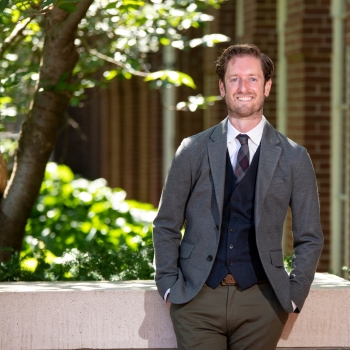
Leandro Bonfim
(Assistant Professor of Management & Organizations)
Prof. Bonfim’s work intersects with trees through his work with traditional communities of agroecological erva-mate producers in Southern Brazil. The erva-mate (Ilex paraguariensis) tree is a native Southern American crop that grows under the shade of another cultural touchstone of his home state, the Paraná Pine (Araucaria angustifolia) tree forests. In his work, he explores how these communities can leverage economic, cultural, and ecological institutional logics to shape the identities and memories of different peoples for promoting a more sustainable and just value chain for smallholder farming communities
John Penniman
Associate Professor of Religious Studies
Prof. Penniman’s current research on the history of religion, herbalism, and pharmacology in the ancient mediterranean world includes an examination of how myths about olive trees inform the medicinal effects attributed to olive oil. Because olive oil was the most common drug substance in antiquity, the cultural meanings of olive trees played a significant role in shaping perceptions of the drug’s power.
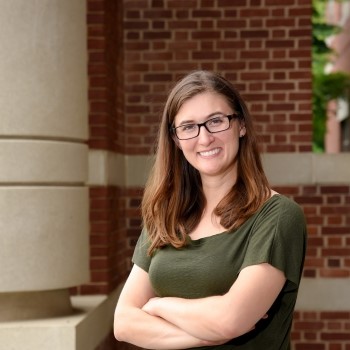
Sarah Lower
Associate Professor of Biology
Dr. Lower explores the ecology and evolution of one of nature’s wonders: fireflies. Her collaborative research examines transitions in pheromone and light-based communication, the drivers of variation in firefly immune systems, and strategies for their conservation. While globally diverse, many species, from the spring-emerging Pyractomena borealis to the hardy winter firefly, rely on trees to survive and reproduce. This dependence highlights the vital role that trees play in ensuring the long-term survival of these populations.
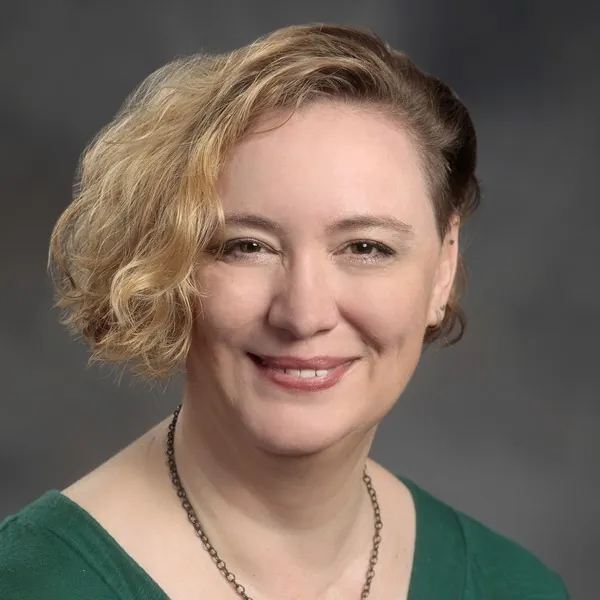
Vandy Coates
Visiting Assistant Professor of Set Design
“Trees have always been at the core of my work, both materially and conceptually. As a theatrical set designer and scenic artist, wood is my primary medium even though my practice often involves transforming it, painting and sculpting one kind of wood to resemble another, or even to evoke entirely different materials. A great example of this is in the Theater departments upcoming musical Head Over Heels which runs March 27-30 in the Harvey Powers Theater. This ongoing dialogue with trees highlights its versatility while deepening my awareness of its inherent structures, grain patterns, and expressive potential. In my teaching, particularly in my biomimicry course, trees frequently emerge as powerful models of efficient and adaptive design. These natural systems inform not only how I think about design but also how I guide students to see materials as dynamic, responsive, and interconnected.”
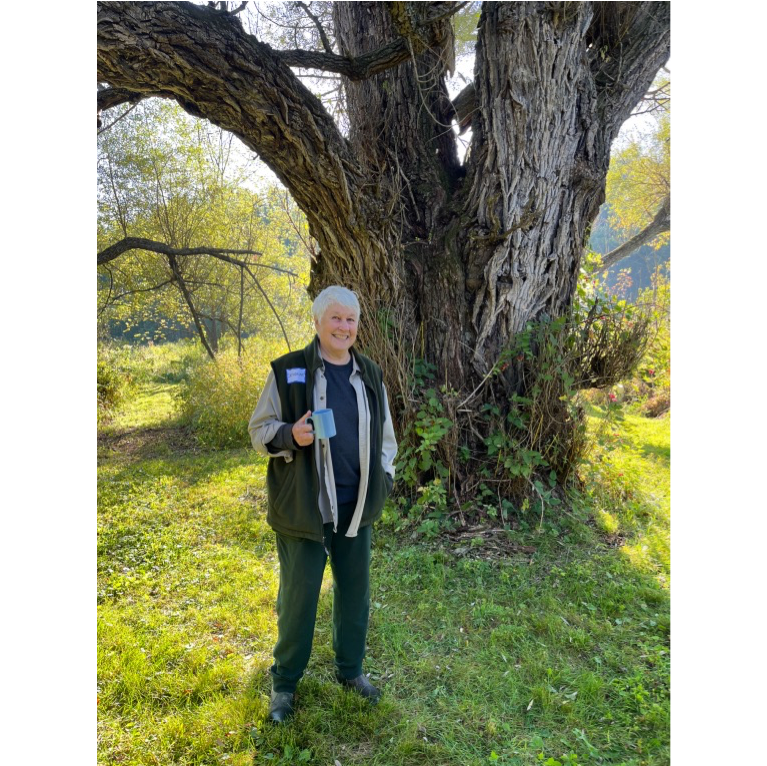
Catherine Smith
Co-Owner, Chicory Lane
Catherine Smith co-owns Chicory Lane in Centre County, a 68-acre old farm now conserved to sustain the ecology and habitat value of wetlands, grasslands, pollinator fields and @ 40 acres of remnant, successional, or restored forest. A conservation easement guides the owners’ land use and conservation practices.
Moderator:
James Shields, Professor of Comparative Humanities and Asian Thought and Faculty Director, BCSE